The Slot Machine in Your Pocket
Every time you open TikTok, Instagram Reels, or YouTube Shorts, you are engaging with a system that operates on exactly the same psychological principle as a slot machine: variable ratio reinforcement.
B.F. Skinner discovered in the 1950s that the most persistent behaviors are produced not by predictable rewards, but by unpredictable ones. When a rat presses a lever and sometimes gets food, sometimes doesn't — with no discernible pattern — it presses the lever obsessively, far more than if it got food every time. The uncertainty is the engine.
This is what your feed does. Sometimes you get a video that makes you laugh. Sometimes it's boring. Sometimes it's infuriating. Sometimes it's transcendent. You never know which one is next. And that uncertainty — that maybe — is what makes you keep swiping.
Zald et al. (2004) used PET imaging to measure dopamine release in the striatum. Rewards delivered on a variable ratio sequence produced significant dopamine release in the striatum. The same rewards delivered on a fixed, predictable schedule? No significant dopamine release detected. The unpredictability itself is what fires the dopamine system.
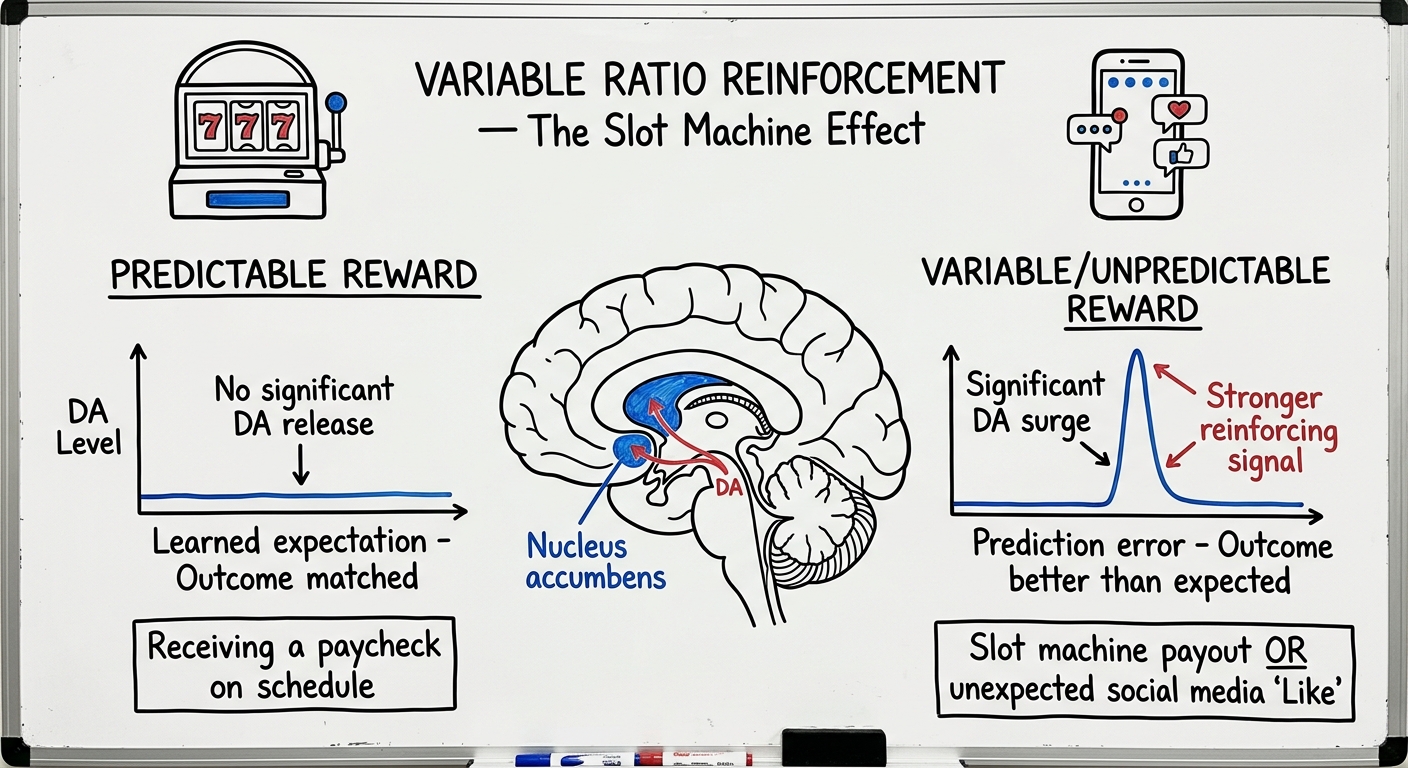
This isn't a metaphor. Platform engineers deliberately build these mechanics. Tristan Harris, former Google design ethicist, has called it "persuasive technology" — the systematic application of behavioral psychology to product design.
Dopamine Is Not the Pleasure Chemical — It's the Wanting Chemical
The popular understanding of dopamine is wrong. Dopamine does not produce pleasure. Neuroscientist Kent Berridge's foundational research demonstrated that dopamine drives wanting, not liking. The spike comes before the reward, not during it.
This distinction is crucial for understanding what short-form content does to you. When you scroll, your brain isn't experiencing pleasure — it's experiencing anticipation. The satisfaction of each video is fleeting, measured in seconds. Within moments, the brain recalibrates and generates a new pulse of wanting. You are chasing a feeling you never quite reach.
Robinson and Berridge's incentive salience theory describes how repeated exposure to rewarding stimuli increases the brain's drive to want without a corresponding increase in liking. Over time, you want more but enjoy less. This is the neurological signature of compulsion, and it precisely describes the experience of someone who has been scrolling for an hour and feels worse, not better.
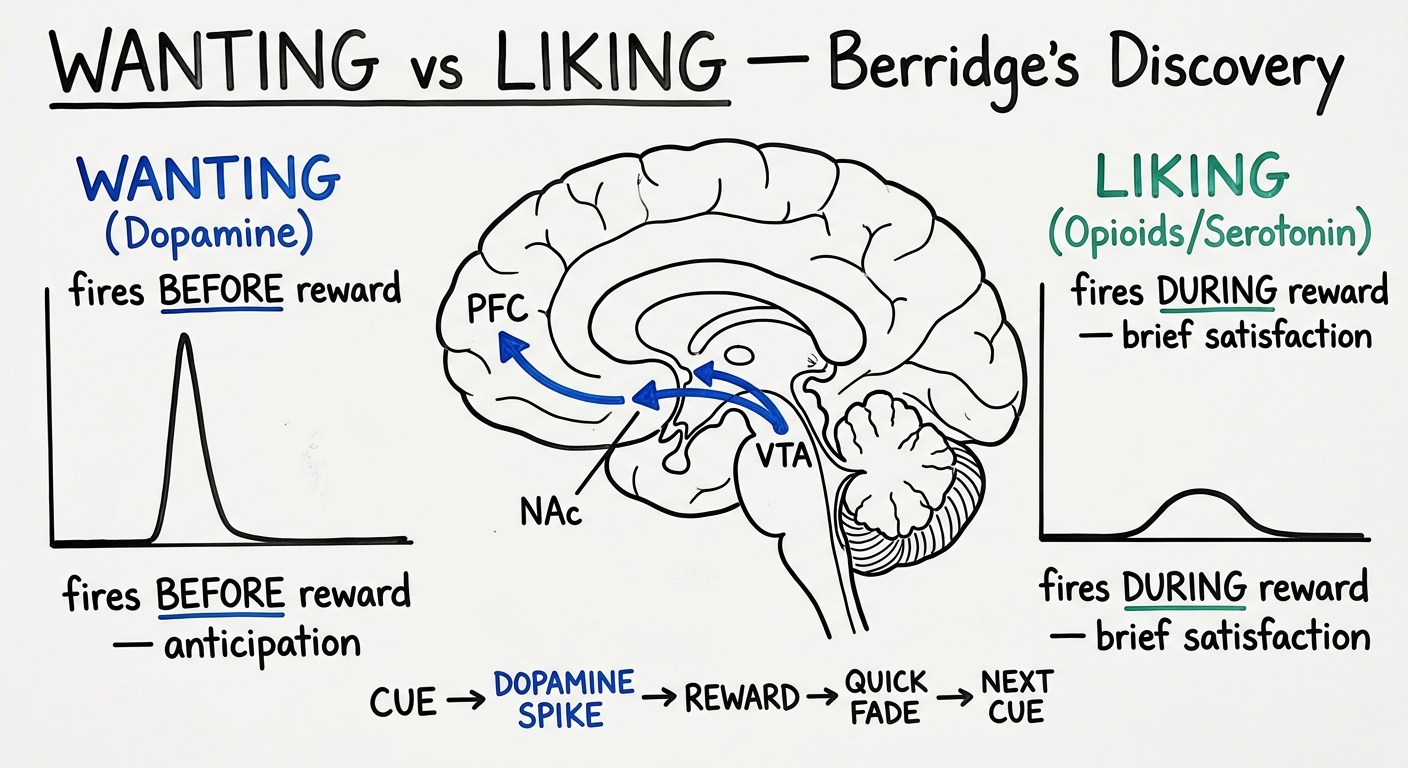
The mesolimbic dopamine pathway — running from the ventral tegmental area (VTA) through the nucleus accumbens to the prefrontal cortex — is the circuit being exploited. This is the same pathway activated by gambling, cocaine, and alcohol. The mechanism is identical; only the stimulus differs.
Critically, the reward loops fire with high efficiency, but the satisfaction system — the quieter interplay of serotonin, oxytocin, and endorphins that produces genuine contentment — barely activates. Short-form content feeds the wanting circuit while starving the fulfillment circuit.
Tolerance and D2 Receptor Downregulation
This is where the neuroscience moves from concerning to alarming. Repeated overstimulation of the dopamine system doesn't just create a habit — it physically changes the receptor landscape of your brain.
PET scan studies by Kim et al. (2011) directly measured dopamine receptor density in people with internet addiction using radioligand [¹¹C] raclopride. The result: significantly reduced D2 receptor availability in the dorsal striatum, including the bilateral dorsal caudate and right putamen.
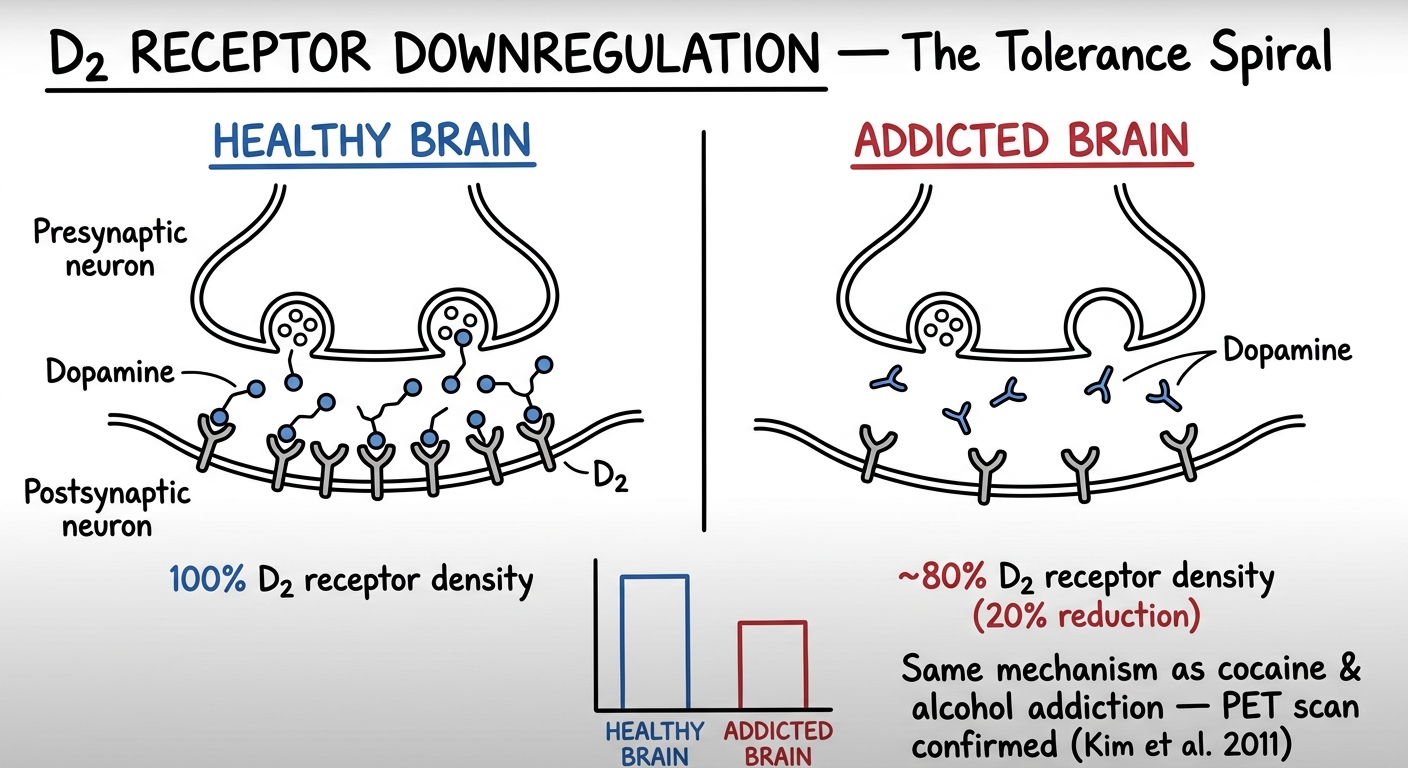
What does reduced D2 receptor availability actually mean? In plain terms: your brain turns down the volume on its own reward receptors. You need more stimulation to feel the same level of satisfaction. This is the clinical definition of tolerance, and it is the same mechanism observed in cocaine and alcohol addiction.
Nora Volkow's work at PNAS established that in addicted subjects, drug-induced dopamine increases are "markedly blunted compared with controls." The same dampening occurs with digital stimulation. The shift from enjoyment to compulsion — diminishing pleasure paired with increasing compulsion — has a precise name: dopamine tolerance.
Research shows a structural transition in the brain's engagement pattern. Early in addiction, the ventral striatum (associated with reward and motivation) drives the behavior. Over time, control shifts to the dorsal striatum (associated with habit and automaticity). The behavior transitions from goal-directed to habitual — you're no longer scrolling because you want to. You're scrolling because the circuit is wired to.
Structural Brain Changes Under the Scanner
Neuroimaging studies have moved beyond correlation. Voxel-based morphometry (VBM) meta-analyses now show consistent, replicable patterns of gray matter volume reduction in heavy digital consumers.
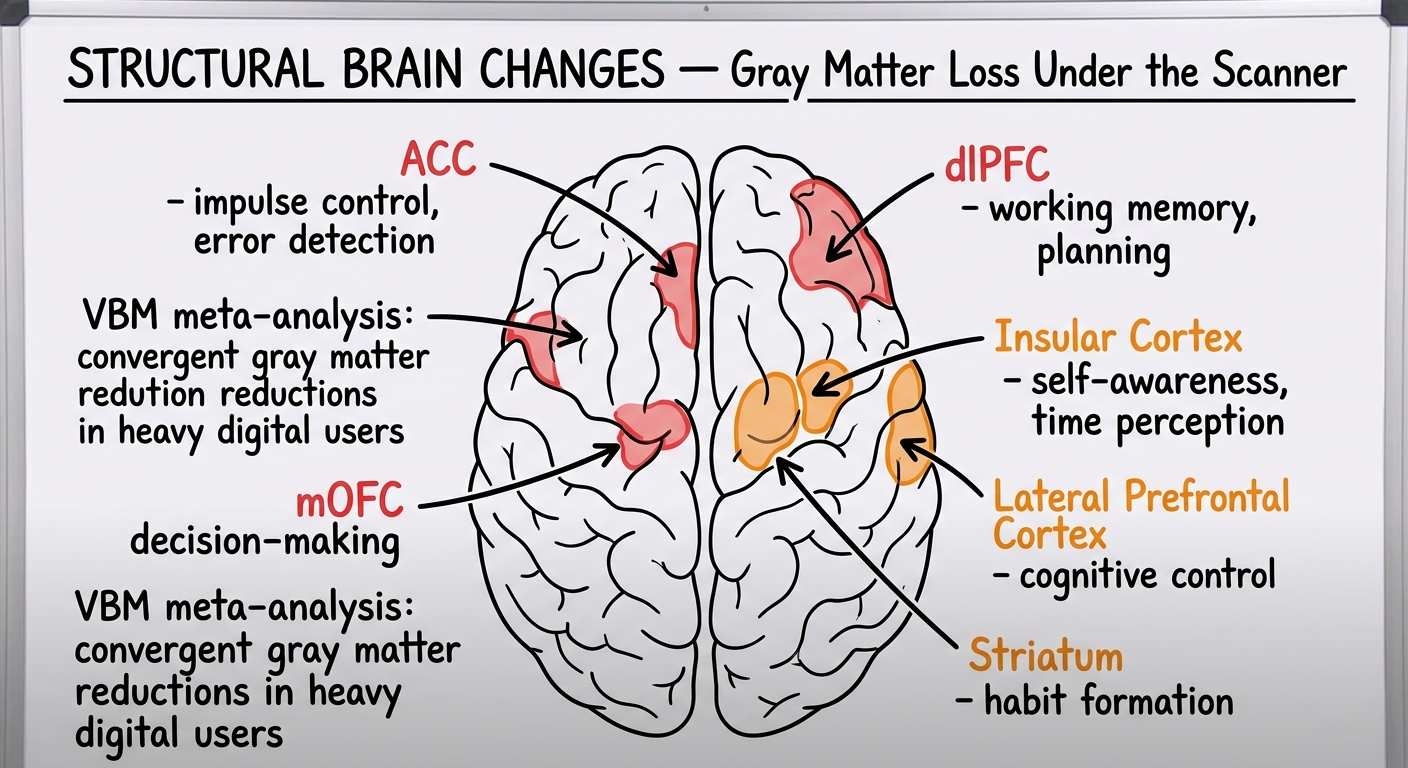
A 2026 meta-analysis in Molecular Psychiatry synthesized VBM data across digital addiction studies and found statistically convergent gray matter reductions in the bilateral ACC, left middle frontal gyrus, and left medial orbitofrontal cortex. These are the same regions implicated in substance addiction.
The brain regions responsible for stopping yourself, thinking ahead, staying focused, and evaluating consequences are physically shrinking in heavy users. The regions responsible for habit and compulsion are becoming dominant. The brain is literally remodeling itself to favor reactive, stimulus-driven behavior over deliberate thought.
The Fragmented Mind
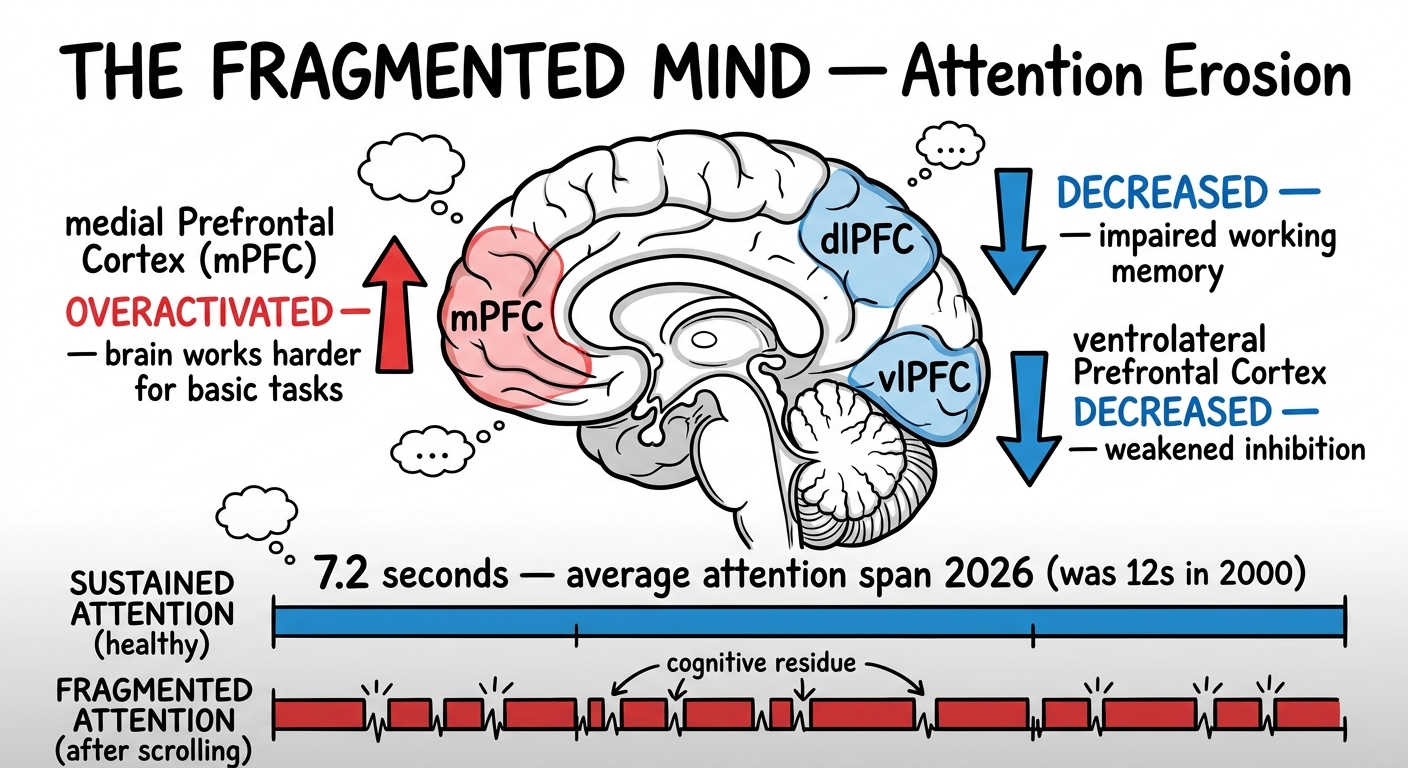
The Neuroscience of Fragmented Attention
A 2025 study published in Scientific Reports (Nature) used functional near-infrared spectroscopy (fNIRS) to measure brain activity in college students before and after social media use. The findings were specific:
- Reduced accuracy in executive function tasks (n-back, Go/No-Go paradigms)
- Increased medial prefrontal cortex (mPFC) activation — suggesting the brain was working harder just to maintain basic performance
- Decreased dlPFC and vlPFC activation — impaired working memory and inhibition
Context Switching Destroys Prospective Memory
Barton et al. (2025) found that the rapid context-switching inherent in short-form video consumption directly damages prospective memory — your ability to remember to do things in the future. Participants exposed to unlimited context-switching conditions showed "significantly deteriorated" prospective memory performance. The pace of switching, not just the content, impairs cognition.
Short-Form Video Reduces Analytic Thinking
Jiang and Ma (2024) demonstrated that even brief exposure to TikTok content reduces analytic thinking, promoting intuitive, low-effort cognitive processing. The brain shifts from System 2 (deliberate, analytical) to System 1 (fast, reactive) — and it stays there even after you close the app.
The constant flow of information doesn't allow deep encoding into long-term memory. The brain is forced to repress the rules and objectives of the last task and reload the new one — a process that is not only resource-consuming but leaves a "cognitive residue" from the former task that distorts the current one. This is why you can scroll for an hour and remember almost nothing specific afterward.
The Death of Deep Reading
Maryanne Wolf, neuroscientist at UCLA and author of Reader, Come Home, has spent decades studying what happens in the brain during reading. Her central finding is both elegant and troubling: reading is not a natural human ability. Unlike speech, which unfolds from genetic blueprints, each human brain must construct its own reading circuit from older cognitive structures.
This circuit, once built, enables what Wolf calls deep reading — the state where a reader connects text to background knowledge, employs inferential and analogical thinking, takes the perspective of the author, and arrives at moments of genuine insight. Deep reading is where empathy, critical thinking, and understanding live in the brain.
"The digital age is effectively reshaping the reading circuits in our brains." When the brain adapts to processing information in rapid, shallow bursts, the contemplative dimension — the capacity to pause, reflect, and form insight — atrophies. Not because you forgot how to read, but because the neural circuit that enables deep reading is being overwritten by one optimized for scanning and skimming.
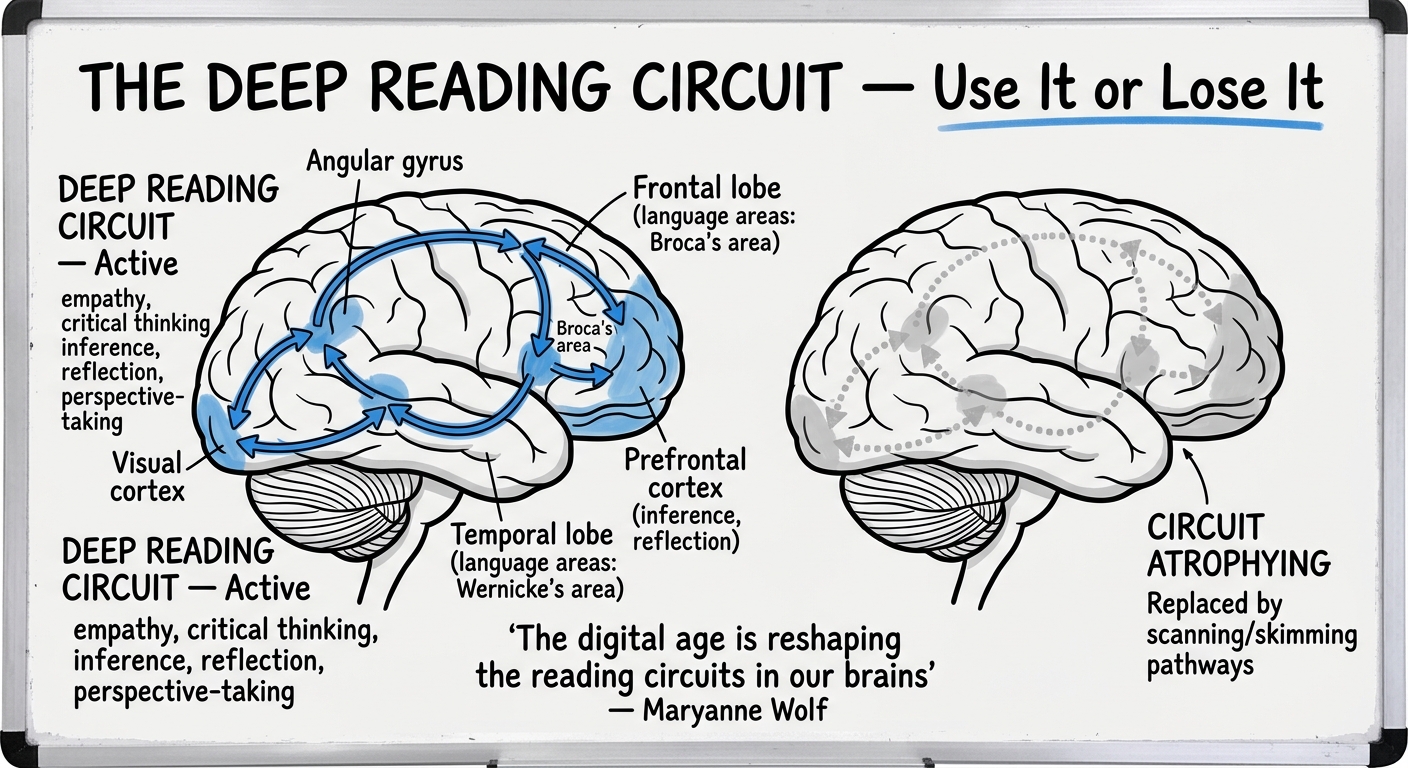
Wolf describes this as a "hinge moment" in human cognitive history. If the deep reading circuit atrophies across a generation, we lose the neurological substrate for empathy, perspective-taking, and resistance to demagoguery. Her proposed solution: biliteracy — build the deep reading circuit through physical books first, then introduce digital media. The order matters because neural circuits, once established, are more resilient.
Default Mode Network — What You Lose When You Never Do Nothing
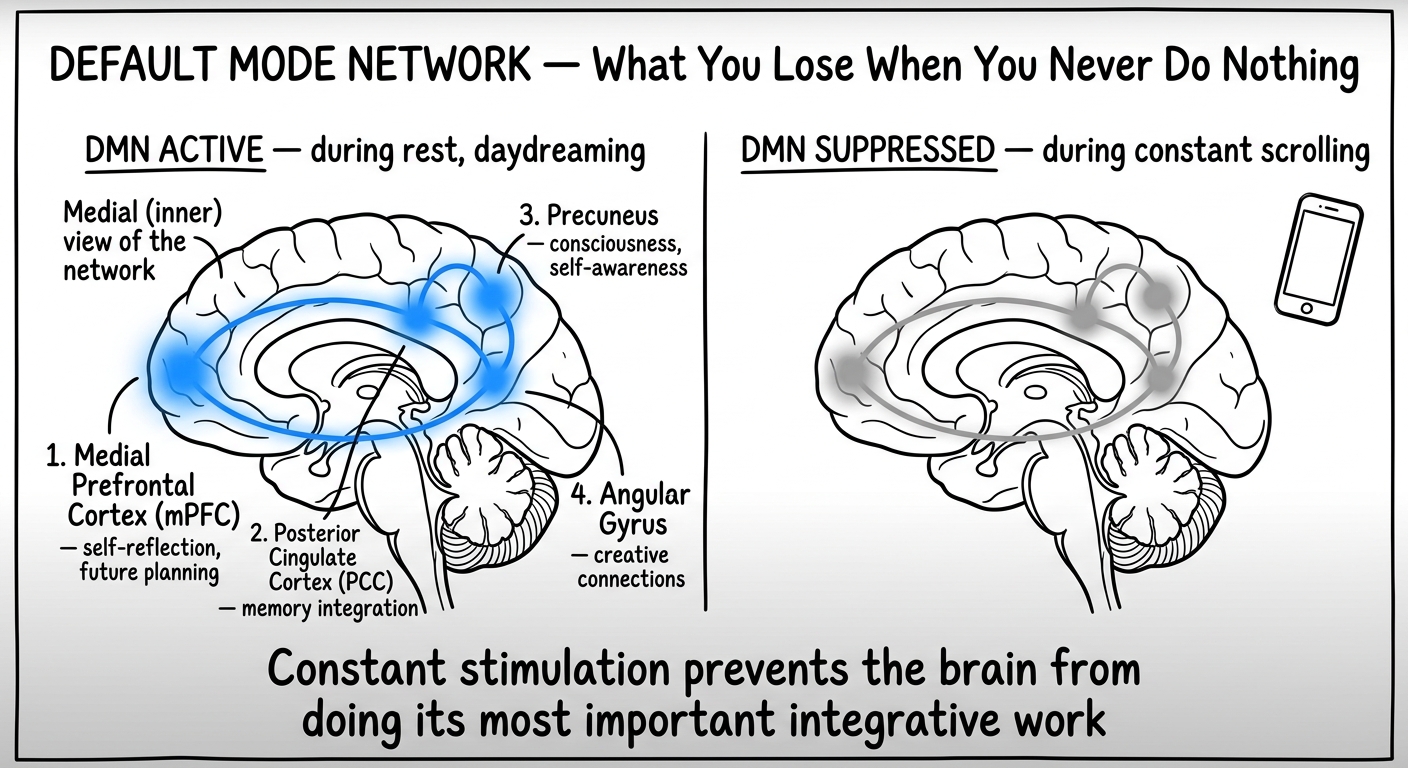
The Default Mode Network (DMN) is a large-scale brain network — medial prefrontal cortex, posterior cingulate cortex, precuneus, angular gyrus — that activates when you are not focused on the external world. It's the brain at wakeful rest: daydreaming, self-reflection, remembering the past, planning the future.
The DMN is not idle time. It is where the brain does its most important integrative work: constructing a coherent sense of self, consolidating memories, generating creative connections, and building the internal narrative that makes you you.
Short-form content consumption fills every moment of potential DMN activation. Waiting in line? Scroll. Sitting on the train? Scroll. Lying in bed before sleep? Scroll. The brain never enters the rest state that allows this network to function.
DMN and Reading Comprehension
Research published in eLife revealed a paradox: the DMN is active during both mind-wandering and deep reading comprehension. In focused readers with good comprehension, the primary visual cortex showed strong functional coupling to DMN regions that support reading. In those who mind-wandered, this coupling weakened. The DMN, properly engaged, is part of the deep reading circuit. Disrupted, it becomes the mechanism of distraction.
The Consciousness Connection
The DMN has emerged as a central focus in the neuroscience of consciousness. Research shows that its capacity to act as a "global workspace" for integrating information is compromised when it cannot activate properly. This is the same network disrupted in disorders of consciousness and under anesthesia. Chronic scrolling doesn't put you under — but it may be reducing the richness of your conscious experience.
How It Compares to Other Addictions
| Feature | Substance Addiction | Short-Form Content |
|---|---|---|
| Reward circuit activated | VTA → nucleus accumbens → PFC | Same pathway (VTA → NAc → PFC) |
| D2 receptor reduction | ~20-22% (PET confirmed) | ~20% (PET confirmed, Kim 2011) |
| Tolerance | Need higher dose for same effect | Need more novel/extreme content |
| Withdrawal | Physical + psychological | Psychological (anxiety, restlessness, irritability) |
| Prefrontal impairment | Documented across substances | Documented (fMRI, fNIRS, VBM) |
| Habit shift (ventral→dorsal) | Well-established | Emerging evidence |
| Reinforcement schedule | Variable ratio (gambling) / fixed (drugs) | Variable ratio (by design) |
| Gray matter reduction | ACC, OFC, PFC | ACC, OFC, mFG (same regions) |
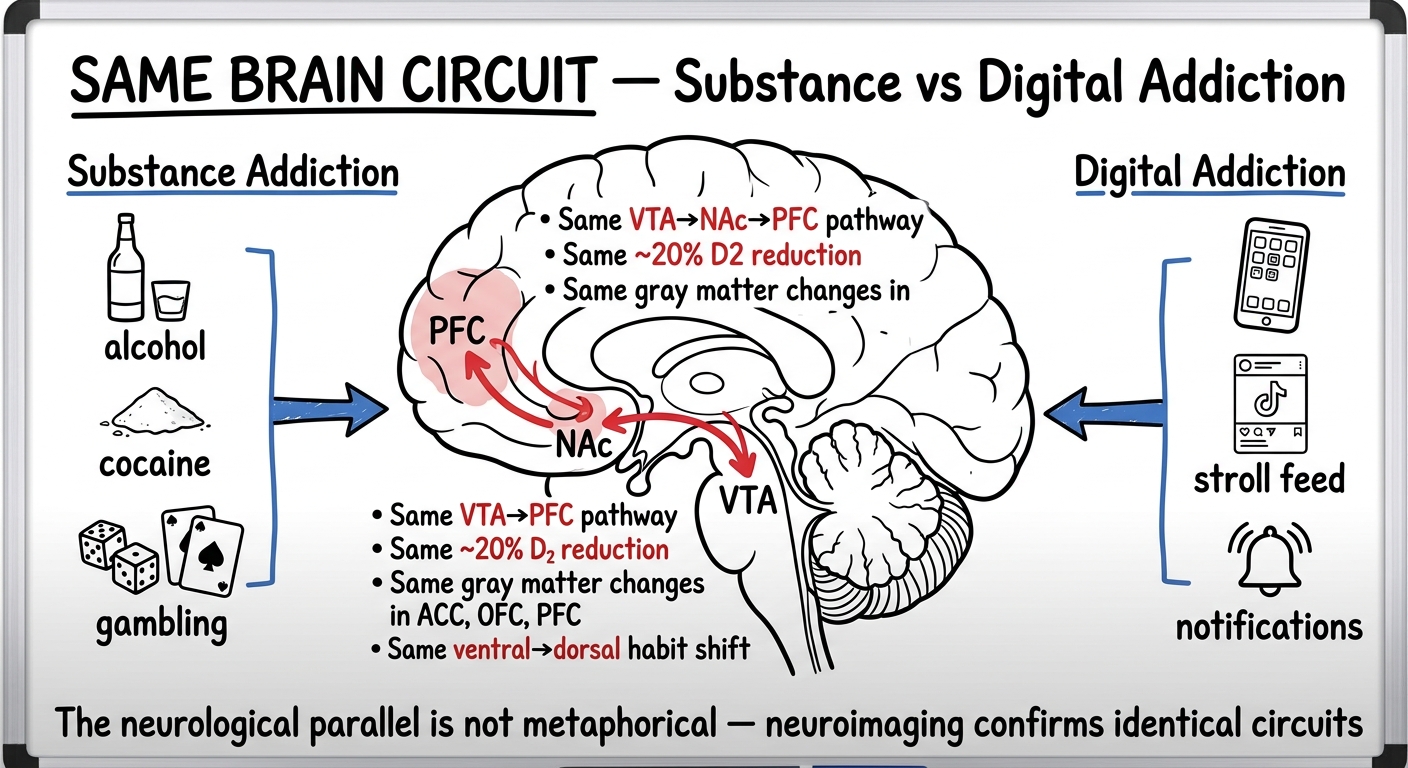
The neurological parallel is not metaphorical. Neuroimaging confirms that the same brain circuits, same neurotransmitter systems, and same structural changes observed in substance addiction are present in heavy digital media consumption. The key difference: substance addiction is recognized by psychiatric frameworks. Behavioral digital addiction is not — yet.
During abstinence, D2 receptor density begins recovering. But the underlying reinforcement circuits — cue-reactivity patterns, automated checking behaviors, weakened prefrontal control — remain intact. When the user re-engages, the original pattern reactivates rapidly because the circuit was preserved, not dismantled. The fix requires restructuring the neural architecture, not just removing the stimulus.
Thrilled to Death — The Anhedonia Epidemic
Hart identified the central paradox years before the short-form video era made it universal: anhedonia — the inability to experience pleasure — is not caused by too little stimulation. It is caused by too much.
Previously, anhedonia was linked only to severe psychiatric disorders: major depression, schizophrenia, chronic pain states. Hart showed that a subtler, more insidious form was spreading through otherwise healthy populations. Not the clinical inability to feel anything — but a steady, creeping decline in the ability to find joy in small events and simple experiences, while being driven toward ever-increasing levels of stimulation just to feel something.
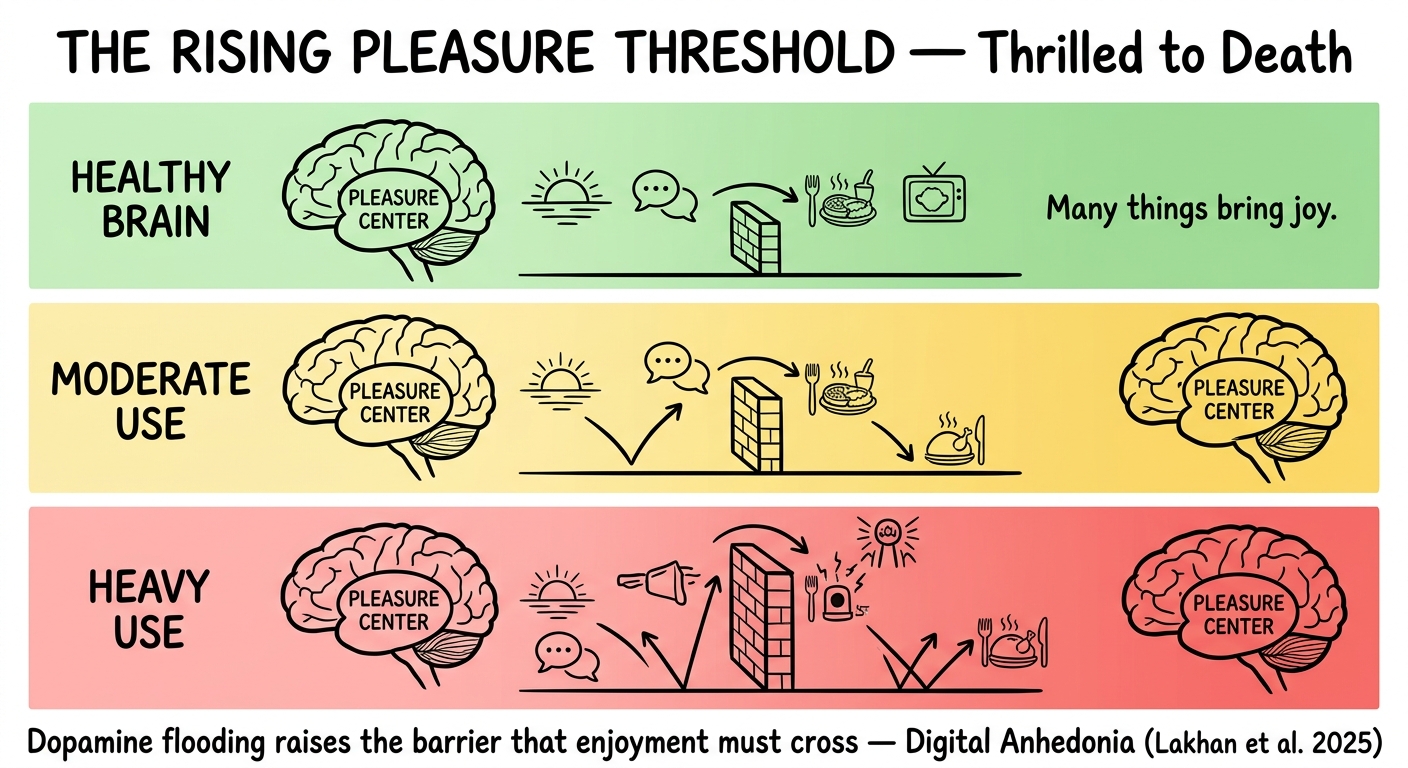
Hart's Threshold Model
Hart illustrated the mechanism with a simple but devastating diagram: dopamine flooding from overstimulation raises the threshold barrier that enjoyment must cross to reach the brain's pleasure center. Small pleasures — a sunset, a conversation, a meal — no longer clear the bar. Only extreme stimulation registers.
This is the neurochemical reality behind the D2 receptor downregulation measured in PET scans. Hart gave it its human face: the person who can binge an entire season and feel nothing, who scrolls for hours and can't remember why they started, who sits in front of a beautiful landscape and reaches for their phone because the landscape isn't stimulating enough.
"Digital Anhedonia" — A New Clinical Concept
In 2025, a research editorial in Cureus (Lakhan et al.) formally proposed the term "digital anhedonia" — the diminished ability to find pleasure in real-world experiences after prolonged digital saturation. The authors argued it may be the first affective disorder of the attention economy, born not from intrinsic psychopathology but from environmental neuroengineering.
Clinicians increasingly encounter teens and young adults reporting irritability, poor concentration, disrupted sleep, and social withdrawal. These symptoms are typically interpreted as anxiety, ADHD, or subclinical depression. But a unifying feature is often overlooked: digital overstimulation and its downstream neurocognitive impact. Affective flattening, decision fatigue, and avoidance of effortful tasks may result not from inherent pathology but from mismatched neural expectations set by digital feedback loops.
Hart was writing in 2007, before TikTok existed. The fact that clinical neuroscience is now confirming and naming exactly the phenomenon he described — and finding it in healthy populations, not just clinical ones — is a striking validation of his core thesis.
The Pleasure-Pain Seesaw
Anna Lembke, who runs Stanford's Addiction Medicine Dual Diagnosis Clinic, observed the same mechanism Hart described — but framed it through an elegant neuroscience principle: opponent-process theory.
One of the most important findings in neuroscience in the last 75 years is that the same brain areas that process pleasure also process pain, and they operate like a balance scale. Every pleasurable experience tilts the scale toward pleasure, but the brain actively compensates by pushing it back toward pain to restore equilibrium. This is homeostasis. The brain's response to pleasure is not passive reception — it's active opposition.
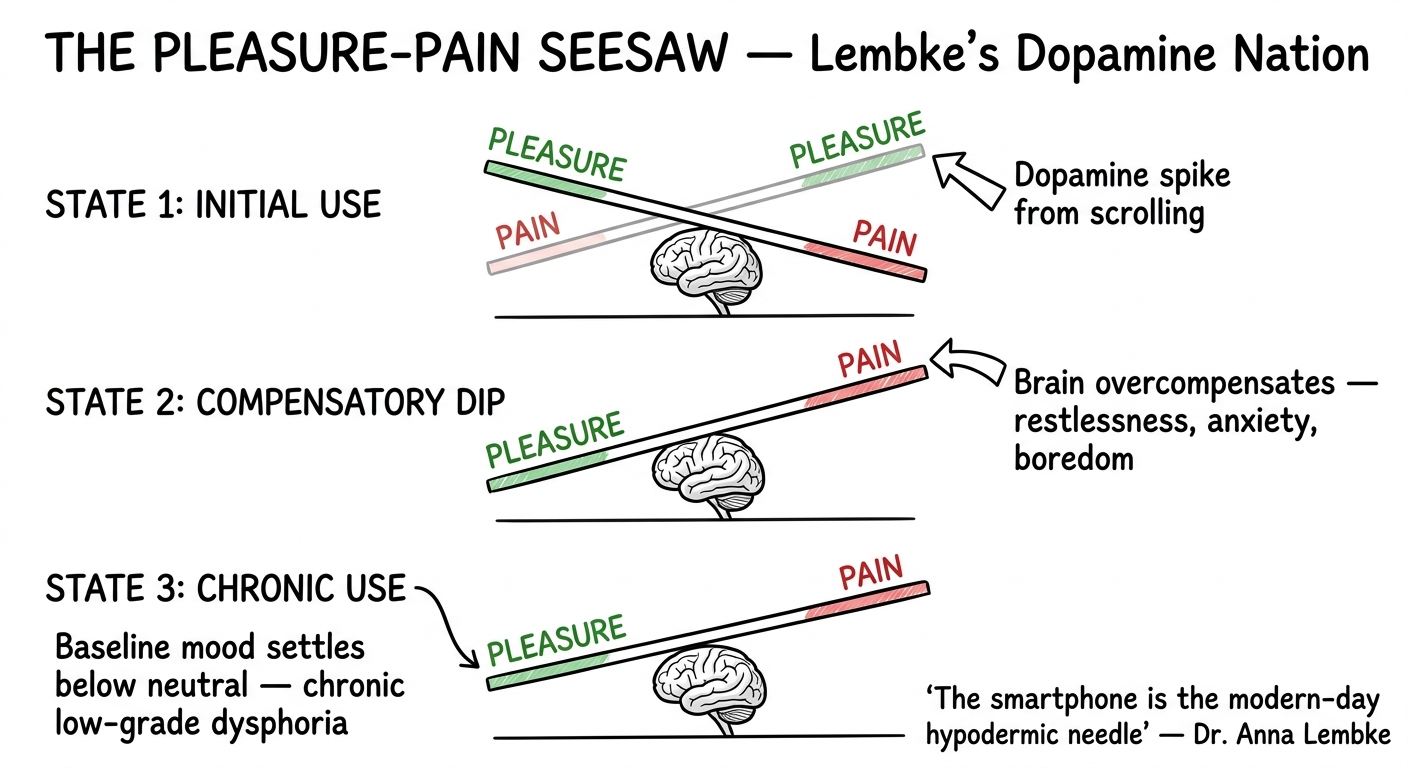
Here is the devastating implication: every dopamine spike is followed by an equal and opposite dip below baseline. That dip is the moment of restlessness, boredom, or anxiety you feel when you put your phone down. It's the micro-withdrawal that makes you pick it back up. And with chronic overstimulation, the resting point of the balance shifts. Your baseline mood settles below neutral.
"The smartphone is the modern-day hypodermic needle, delivering digital dopamine 24/7 for a wired generation." Many people struggling with depression, anxiety, insomnia, and low motivation are actually experiencing the consequences of chronic overstimulation — the addiction is causing the pain, not relieving it.
The Counterintuitive Fix: Seek Discomfort
Lembke's most counterintuitive finding: deliberate, mild discomfort — cold water immersion, intense exercise, fasting — can help reset the balance. These stressors tip the scale slightly toward pain, and the brain's compensatory rebound pushes back toward pleasure, producing a gentle, natural lift. The seesaw works in your favor when you use it correctly.
Her clinical protocol: a 4-week abstinence period to allow dopamine receptor density to recover. Patients typically feel worse for the first 2 weeks as the brain experiences withdrawal. By week 4, ordinary experiences — food, conversation, sunlight — begin to register as pleasurable again. The brain recalibrates.
The Shallows — Neuroplasticity Working Against You
Carr's argument fills the gap between the dopamine research and the structural brain changes: neuroplasticity. The brain is not static. It physically restructures itself based on how you use it. Every hour you spend in one mode of thinking strengthens the neural pathways for that mode and weakens the pathways you aren't using.
This is not metaphor. Brain scientists have demonstrated that even five hours of internet use can cause the formation of new neural pathways in non-internet users. The brain literally rewires for the medium it's exposed to.
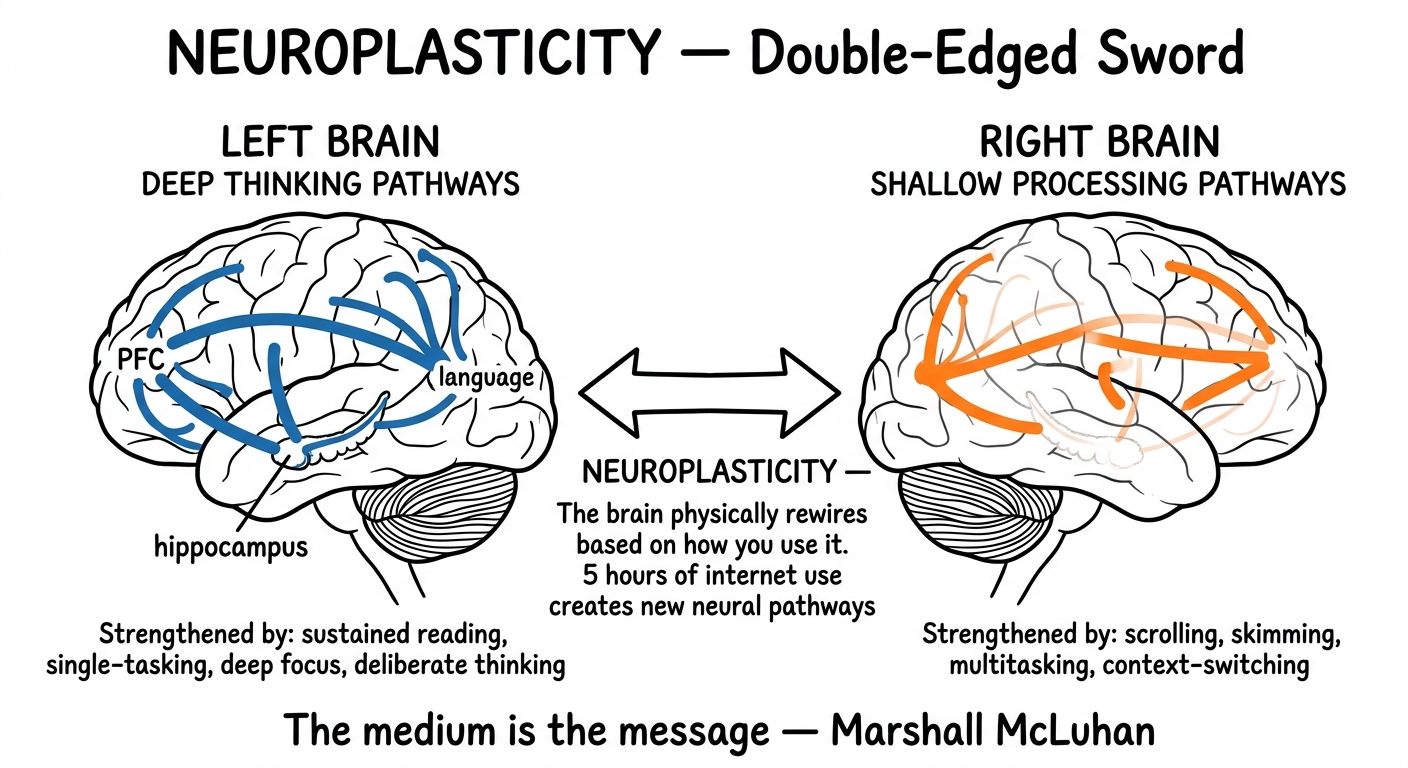
What Gets Stronger vs. What Gets Weaker
| Strengthened by digital consumption | Weakened by digital consumption |
|---|---|
| Cursory reading and scanning | Deep reading and sustained comprehension |
| Hurried, distracted thinking | Calm, concentrated, deliberate thinking |
| Superficial learning (breadth) | Deep learning (depth) |
| Impulsive decision-making | Deliberate decision-making |
| Multitasking | Single-tasking and flow states |
Carr identified a critical paradox of neuroplasticity: it provides an escape from genetic determinism, but it also imposes its own form of determinism. As particular circuits strengthen through repetition, they transform an activity into a habit. The flexibility of neuroplasticity can end up locking you into rigid behaviors.
Carr cites studies showing that hyperlinks make text harder to understand, not easier. The cognitive load of deciding whether to click is larger than intuition suggests. People skim hypertext and retain less content. The format that appears to offer more access to knowledge actually reduces comprehension. Even the medium through which we read is reshaping what our brains can do with what we read.
The key takeaway Carr borrows from media theorist Marshall McLuhan: the medium is the message. The technologies we use — maps, clocks, books, phones — shape our minds through neuroplasticity. Certain skills strengthen while others atrophy. The internet is not just a delivery mechanism for content. It is an environment that restructures the brain for a particular kind of cognition — fast, shallow, fragmented — at the expense of another kind: slow, deep, sustained.
Brain Fog and Slow Recall — What's Actually Happening
You know the word. You've used it a hundred times. It's right there — but it won't come. Ten minutes later, in the shower, it surfaces effortlessly. This isn't random. It's a specific neurological pattern, and digital overconsumption is making it worse.
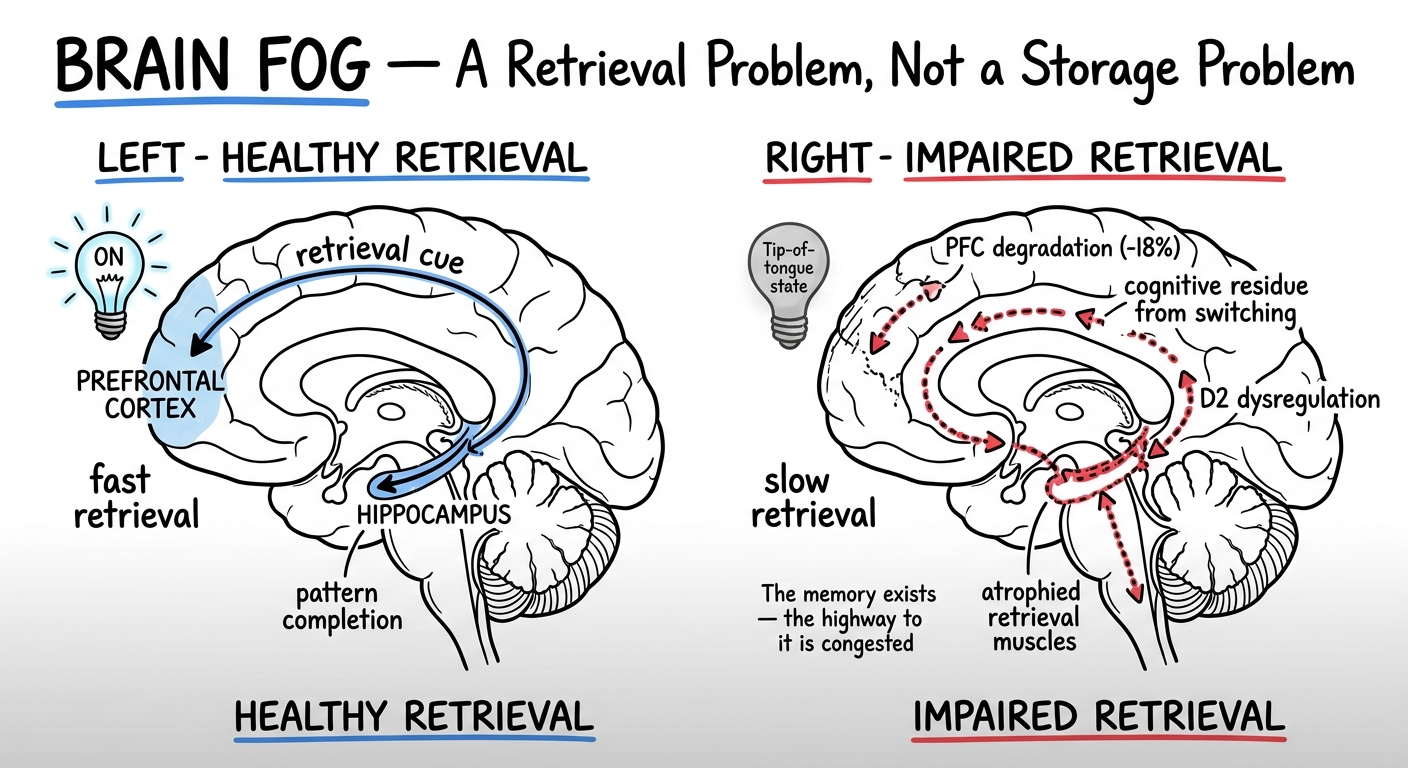
The Retrieval Problem (Not a Storage Problem)
The critical distinction: the memory exists. It is encoded and stored. The problem is retrieval — the brain's ability to access the memory on demand. This is governed by different neural circuits than storage, and those circuits are precisely the ones degraded by chronic digital consumption.
Memory retrieval depends on the prefrontal cortex coordinating with the hippocampus to reconstruct the distributed pattern of the memory. The PFC sends a retrieval cue; the hippocampus pattern-completes the memory trace; the information surfaces into consciousness. When this pathway is impaired, retrieval slows or fails temporarily — even though the memory is intact.
The delayed recall you experience — remembering 10 minutes later, or in the shower — is the brain completing retrieval through an alternate, slower pathway. When the direct PFC-hippocampal route fails, the brain can still access the memory through associative cues, context reinstatement, or reduced cognitive load (which is why it often happens when you stop trying). The memory was never gone. The highway to it was congested.
Why Digital Consumption Causes This
- Prefrontal cortex degradation. The PFC orchestrates retrieval. Neuroimaging shows 18% decreased PFC activity from dopamine loops, plus gray matter reduction in the dlPFC, ACC, and mOFC. Less PFC capacity = weaker retrieval cues.
- Retrieval muscles atrophied. You've outsourced recall to your phone. Every time you Google instead of trying to remember, you skip a retrieval attempt. Research (2025, Scientific Reports) shows that lower frequency of retrieval directly predicts more retrieval failures. Use it or lose it is literally true for memory pathways.
- Cognitive residue from context-switching. Rapid switching between short-form content leaves "cognitive residue" — fragments of the previous task that interfere with the current one. This noise in the working memory system makes clean retrieval harder.
- Dopamine-attention coupling disrupted. Dopamine modulates attention and retrieval. Dysregulated dopamine (from D2 receptor downregulation) manifests as inattention, which presents as poor memory, carelessness, and low focus. It's not that you forgot — it's that your attention system can't lock onto the retrieval cue long enough to complete the process.
- Shallow encoding from fragmented attention. Even when information enters memory, it's encoded shallowly because attention was fragmented during learning. Shallow encoding means fewer retrieval routes. There are fewer paths the brain can use to find the memory when it needs it.
- GABA/glutamate imbalance. Proton MRS imaging (2025) found that lower GABA and altered glutamate concentrations in frontal and temporal cortices contribute to slower naming and retrieval interference — local disruptions in excitation-inhibition balance that impair signal propagation within the circuits you need for recall.
The "Tip of the Tongue" Epidemic
The tip-of-the-tongue (TOT) state — you know you know it, you can feel the shape of the answer, but you can't produce it — is a transient retrieval failure involving three brain regions: the anterior cingulate cortex (which signals "I know this but can't get it"), the prefrontal cortex (which searches and verifies), and the insula (which helps access the phonological form).
All three of these regions show reduced gray matter or reduced activation in heavy digital consumers. The same brain changes that produce the broader cognitive impacts documented above are directly, mechanistically responsible for the increasing frequency of "I know this word but I can't think of it" moments.
Research shows that repeated TOT experiences for the same item can become self-reinforcing. The brain develops a maladaptive retrieval pattern where the failure itself becomes part of the memory trace. You don't just fail to recall the word — you start to "remember" that you usually can't recall it, which makes future retrieval even harder. Breaking this loop requires deliberate retrieval practice.
The Recovery Protocol — What Actually Works
The same neuroplasticity that created the problem can reverse it. The brain physically restructures based on what you do with it. But recovery requires targeted action on the specific circuits that are degraded — not just "use your phone less."
Protect three windows: first hour after waking (no phone), meals (screen-free), and last hour before bed. These are the highest-leverage changes.
The effort of retrieval — the "desirable difficulty" — is what strengthens the memory trace. Passive re-exposure (re-reading, re-watching) creates an illusion of competence but doesn't build retrieval strength.
In people with depleted dopamine systems (Parkinson's, substance recovery), 8 weeks of structured exercise produced a measurable ~14% increase in striatal D2/D3 receptor availability on PET scans (Robertson et al., 2016). In healthy populations, cross-sectional data shows physically active adults retain higher D2 receptor levels with age.
This re-activates the Default Mode Network — the brain network responsible for memory consolidation, self-reflection, and creative connection. It also allows the pleasure-pain seesaw to return to baseline.
Late-night phone use is specifically correlated with reduced cognitive scores in working memory, attention, and processing speed. The screen before bed doesn't just delay sleep — it degrades the quality of the consolidation that happens during sleep.
Start with whatever you can sustain. If 30 minutes feels impossible, that itself is diagnostic — it means the circuit has atrophied. Begin with 10 minutes and extend by 5 minutes per week.
This is not masochism. It's using the seesaw mechanism to restore baseline sensitivity instead of depleting it.
Media multitasking is directly associated with reduced gray matter in the ACC (Loh & Kanai, 2014). Single-tasking reverses it. This is the behavioral equivalent of physical therapy for the attention system.
Recovery Timeline
The brain's plasticity works in your favor here. The same mechanism that caused the damage enables recovery — but it takes time, and the timeline depends on the depth of the changes.
| Phase | Timeframe | What Changes |
|---|---|---|
| Withdrawal | Days 1–3 | Cravings, restlessness, irritability. This is real withdrawal — the pain side of Lembke's seesaw overcompensating. It passes. |
| Stabilization | Days 4–7 | Focus and energy begin stabilizing. Sleep quality improves measurably. Cravings reduce but don't disappear. |
| Cognitive return | Weeks 2–3 | Noticeable improvement in recall speed, sustained attention, and ability to hold a thought. Stress and depressive symptoms reduce (RCT evidence). |
| PFC restoration | Week 4+ | Prefrontal cortex function measurably restored at ≤2 hrs/day entertainment screen time. Decision-making and impulse control improve. |
| Structural recovery | Months 2–6+ | Gray matter volume changes take longer and require sustained behavioral change. Exercise accelerates this. The trajectory is promising but data is still limited. |
Recovery is not about willpower or discipline. It's about understanding that your brain physically restructures based on what you do with it. Every hour of deep reading builds the deep reading circuit. Every retrieval attempt strengthens the retrieval pathway. Every hour of unstimulated rest allows the DMN to consolidate. Every bout of exercise supports dopamine system health. The protocol is not a punishment — it's physical therapy for a brain that has been trained in the wrong direction.
Evidence Quality — Honest Assessment
Not all 8 steps rest on equal evidence. Here is an honest grading of each, because claiming "science says" when the science is actually "a plausible extrapolation from neuroscience principles" is exactly the shallow thinking this document argues against.
| Step | Evidence tier | What exists | What doesn't |
|---|---|---|---|
| 1. Screen time reduction | Strong | Multiple RCTs (Pieh 2025 in BMC Medicine; SCREENS trial 2022; JAMA 2024). Consistent improvements in well-being, mood, sleep, depressive symptoms across populations. | Effect sizes are small-to-medium. The specific ≤2 hr/day threshold is a practical guideline, not a precisely calibrated dose. No RCT has measured PFC structural recovery directly. |
| 2. Active retrieval practice | Very strong | One of the most replicated findings in cognitive science. Roediger & Karpicke 2006, published in Science (2008). Meta-analyses show g ≈ 0.50–0.61. Rated "high utility" by Dunlosky (2013). Replicated across materials, settings, and populations. | Most studies test academic recall, not everyday "tip-of-tongue" retrieval. The specific advice to "struggle for 60 seconds before Googling" is a practical application, not a tested protocol. |
| 3. Exercise | Strong (general) / Mixed (D2 specific) | Exercise improving cognition: extremely robust, hundreds of studies. D2 receptor upregulation: human PET evidence exists in dopamine-depleted populations — Parkinson's (Fisher 2013) and meth users (Robertson 2016, ~14% increase). Cross-sectional PET data shows preserved D2 levels in active healthy adults (Dang 2017). | D2 upregulation in healthy humans from exercise interventions: mixed or null results (Jonasson 2019 found no selective effect). The HIIT/D2 receptor claim is from rat studies only. The "40% dopamine increase" figure is from a mouse study, not human. Exercise helps cognition broadly, but the specific D2 receptor mechanism in healthy people is not proven. |
| 4. Deliberate boredom | Moderate | The DMN's role in memory consolidation, self-reflection, and creative thinking is well-established neuroscience. It activates during wakeful rest. Constant stimulation does prevent its activation. | No RCT has tested "deliberate boredom" as a cognitive intervention. The causal chain — "schedule unstimulated time → DMN activates → cognition improves" — is a plausible inference from neuroscience, not a tested intervention. |
| 5. Sleep hygiene | Strong | Sleep's role in memory consolidation is one of the most robust findings in neuroscience. Screen light disrupting melatonin and sleep architecture is well-documented. Late-night phone use correlates with reduced cognitive scores. | The specific "60 minutes before bed" cutoff is a clinical recommendation, not a precisely calibrated finding. Most phone/sleep studies are correlational, not experimental. |
| 6. Deep reading | Moderate | Wolf's neuroscience of the reading circuit is well-established. Reading activates a specific neural network. Neuroplasticity means practice strengthens that network. | No RCT has tested "30 minutes of daily deep reading" as a cognitive rehabilitation intervention. The dosage recommendation is extrapolated from neuroplasticity principles, not from intervention trials. Wolf's work is observational/theoretical, not clinical. |
| 7. Mild discomfort (cold exposure) | Moderate | Cold water immersion at 14°C for 1 hour increased plasma dopamine ~250% and norepinephrine ~530% in one human study (Srámek et al., 2000). The elevation was sustained for 2–3 hours. Opponent-process theory is well-established neuroscience. | That study measured plasma catecholamines, not brain dopamine directly. It was 1 hour at 14°C — not a 2-minute cold shower. No study has shown cold exposure reverses digital anhedonia specifically. Lembke's recommendations are clinical observations, not RCTs. The connection to "resetting reward sensitivity" is theoretical. |
| 8. Single-tasking | Weak (as intervention) | Loh & Kanai (2014) found correlation between heavy media multitasking and reduced ACC gray matter. The underlying principle — sustained attention strengthens PFC circuits — is consistent with neuroplasticity. | Loh & Kanai was cross-sectional, not causal — it can't tell us whether multitasking shrank the ACC or whether people with smaller ACCs tend to multitask more. No RCT has tested single-tasking as a rehabilitation protocol. The claim that "single-tasking reverses gray matter loss" is an extrapolation. |
Steps 1, 2, 3 (general), and 5 rest on strong experimental evidence. Steps 4, 6, and 7 are grounded in solid neuroscience but haven't been tested as specific interventions in RCTs — they are plausible, not proven. Step 8 is the weakest as an intervention claim. The overall protocol is directionally sound — every step targets a mechanism that the research identifies as relevant — but claiming each step is equally "proven by science" would be an overstatement. The honest framing: these are the best-supported actions available given current neuroscience, not a clinically validated treatment protocol.
Key Studies and Research
The findings above draw from peer-reviewed neuroscience research, systematic reviews, and meta-analyses published in major journals. Selected sources:
- Kim et al. (2011) — Reduced striatal dopamine D2 receptors in people with Internet addiction — PET imaging study, PubMed
- Volkow et al. (2011) — Addiction: Beyond dopamine reward circuitry — PNAS
- Fineberg et al. (2022) — Structural gray matter differences in Problematic Usage of the Internet: meta-analysis — Molecular Psychiatry
- Montag et al. (2023) — Neuroimaging the effects of smartphone (over-)use on brain function and structure — Psychoradiology, Oxford Academic
- Frontiers (2023) — Impact of digital technology, social media, and AI on cognitive functions — Frontiers in Cognition
- Engineered highs: Reward variability and frequency as prerequisites of behavioural addiction — ScienceDirect
- fNIRS assessment: decline in executive function following social media use — Scientific Reports, Nature (2025)
- How short video addiction affects risk decision-making (fNIRS) — Frontiers in Human Neuroscience (2025)
- Impact of Short-Form Video Use on Cognitive and Mental Health: Systematic Review — medRxiv (2025)
- Neural, neurotransmitter, and molecular signatures of gray matter alterations in digital addiction — ScienceDirect (2026)
- Modern Day High: The Neurocognitive Impact of Social Media — PMC (2025)
- Perceptual coupling/decoupling of DMN during mind-wandering and reading — eLife
- Maryanne Wolf — Reader, Come Home: The Reading Brain in a Digital World
- Imaging addiction: D2 receptors and dopamine signaling — PMC
- Human Attention Span Statistics 2026 — World Futures Global, citing Microsoft Research
- Archibald D. Hart — Thrilled to Death: How the Endless Pursuit of Pleasure Is Leaving Us Numb (2007)
- Anna Lembke — Dopamine Nation: Finding Balance in the Age of Indulgence (2021) — Stanford Addiction Medicine
- Nicholas Carr — The Shallows: What the Internet Is Doing to Our Brains (2010) — Pulitzer Prize finalist
- Lakhan et al. (2025) — Digital Anhedonia as an emerging clinical concept — Cureus
- Merklein et al. (2025) — Anhedonia in everyday life: well-being in healthy and clinical populations — PLOS One
- Rethinking Pain and Pleasure — Review of Dopamine Nation — PMC/NIH
- NPR: Anna Lembke explores the link between pleasure and pain
- Mnemonic factors associated with tip-of-the-tongue phenomenon (2025) — Scientific Reports, Nature
- Neural correlates of tip-of-the-tongue states — PMC
- Understanding Digital Dementia and Cognitive Impact in the Internet Era — PMC (2024)
- How to Break Free From Brain Fog and Digital Overload — Psychology Today (2024)
- Working Memory in the Prefrontal Cortex — PMC
- Dopamine Fasting: Science, Myths, and How to Reset (Dr. Cameron Sepah, UCSF)
- Screen Time Might Be Shrinking Your Brain — Psychology Today (2025)